
Trace Fairfield County Former Owners by Era
No county recorder exists here. Deeds for past owners sit with the city or town clerk, in the grantor and grantee indexes. Online coverage differs by municipality. Start with a deed already tied to the parcel, then work back through the source that covers the next earlier transfer.
| Ownership source | Documented span | Access point | Best use |
|---|---|---|---|
| Bridgeport land index | Records from 1948; images from 1983; maps from 1835 | Current and legacy clerk portals | Index parties, dates, deeds, and map leads |
| Stamford online land records | 1998 forward | Town Clerk online search | Recent former owners and book/page |
| Municipal clerk vault | Before each web cutoff | Correct town or city clerk | Older deed books, indexes, and maps |
| Norwalk Hunt Collection | 1651 to 1800 | Norwalk Public Library | Colonial records, maps, transcripts, and indexes |
An index entry is not always an image you can open. Record the source, its stated coverage, and when you accessed it. That habit keeps a missing image from being mistaken for a missing transfer.
Bridgeport Former Owners Cross Three Cutoffs
Bridgeport's legacy portal lists separate cutoff dates for searchable recorded land, for images, and for maps. The current Bridgeport public search and the older interface are two different routes into the clerk's land records, so compare what each covers before trusting either to hold everything. The legacy Bridgeport index offers search modes by Name, Document, Book, and Date, which is handy for working a grantor chain backward.
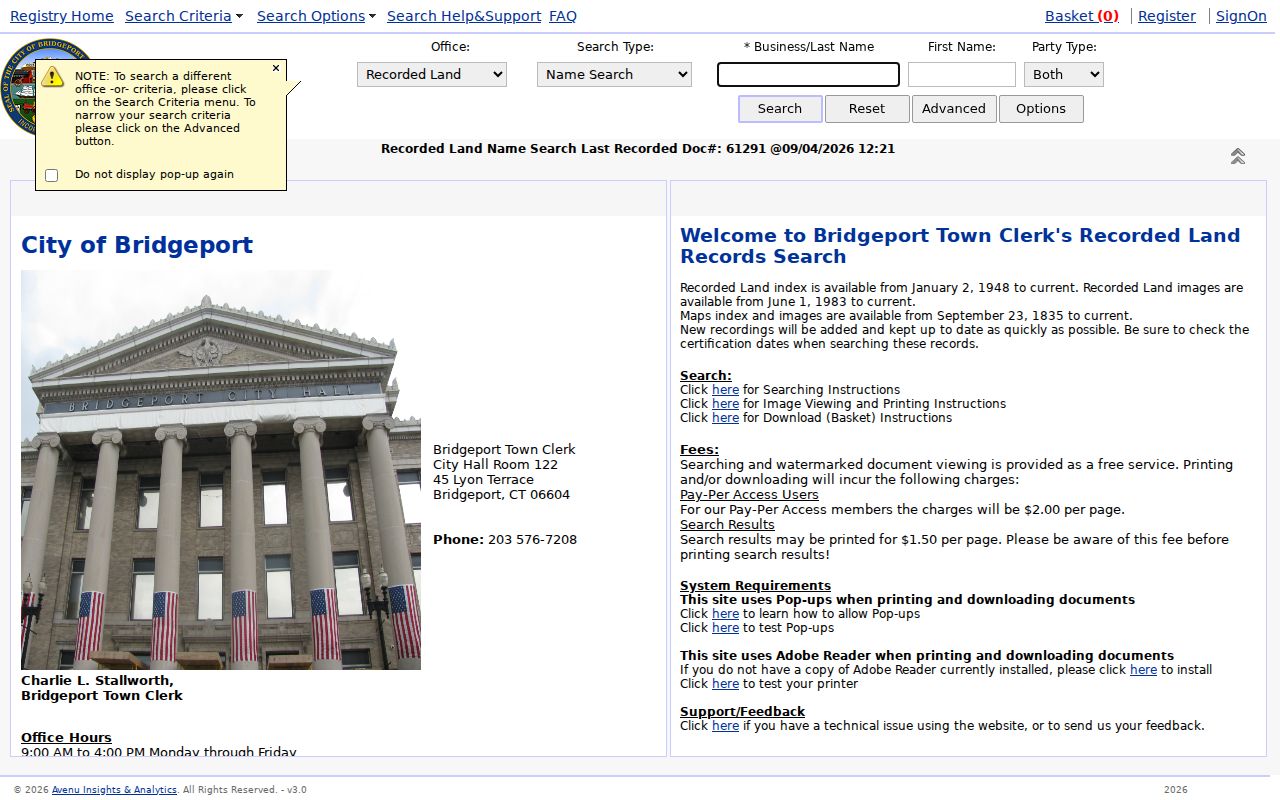
A pre-1983 index hit still has value even without an attached image. Bring the book and page citation to the Bridgeport Town Clerk. The clerk can retrieve the original deed for inspection or provide a copy.
Reconstruct Fairfield County's Deed Chain Backward
Every verified deed hands you the name you need next. The grantee received the interest. The grantor conveyed it. Search that grantor's own name as an earlier grantee, then confirm the acquisition describes the same piece of land before climbing another rung.
- Begin with the newest deed verified against the current parcel.
- Copy grantor, grantee, recording date, deed type, book/page, and legal description.
- Find the deed by which that grantor acquired the property.
- Compare lot, map, road, prior-deed citation, and municipality before accepting the link.
- Repeat until online coverage ends, then continue through the clerk vault or preserved record.
- Grantor
- The party conveying the stated interest.
- Grantee
- The party receiving the stated interest.
- Chain of title
- The linked sequence of transfers for the same land.
- Reverse index
- An index path organized by grantor names.
- Legal description
- The land wording used to distinguish the parcel from a same-name or same-address lead.
Stamford Former Owners Before 1998 Move Offline
Stamford's Town Clerk puts land records online from 1998 forward. Earlier former owners are not missing. Their trail simply moves into the clerk's vault and preserved collections. The Ferguson Library's Stamford Room adds maps, city directories, newspapers, and municipal records that can decode old terms in those earlier deeds.
Web coverage is not record depth. Stamford's 1998 online start marks an access boundary, not the beginning of local ownership.
Stamford's 1949 consolidation of town and city government can also explain odd jurisdiction wording in old deeds. Quote the deed exactly as written. Add any modern cross-reference separately.
Norwalk's Colonial Trail Adds Time Depth
The Malcolm P. Hunt Collection holds Norwalk land records, maps, transcripts, and indexes covering 1651 through 1800. Those colonial materials can connect early home lots and their owners to later property records. The collection serves historical research, though. It is not a substitute for the municipal clerk's title record. The Norwalk historical land-record source documents what the collection contains.
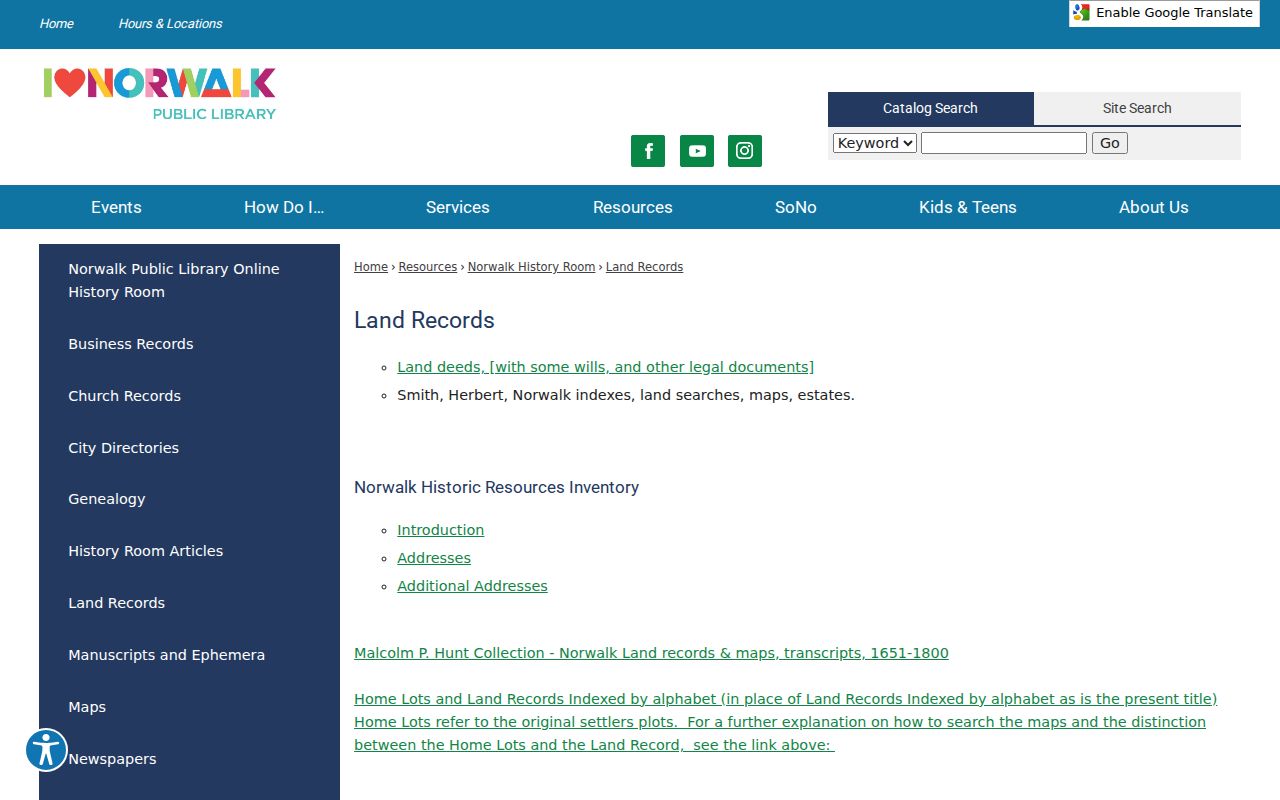
Norwalk's 1913 consolidation can turn village, road, and taxing-district names into vital search terms. Keep the historic name beside the modern parcel identity so neither clue gets lost.
Match Fairfield County Former Owners to the Land
A surname alone proves nothing. To build a real chain, compare book and page, lot number, map or subdivision reference, boundaries, acreage, the prior deed cited, and the municipality involved. Modern keys like an MBL, MBLU, PID, or tax account can orient a property search, but they are local identifiers and can shift after parcel splits or mergers. Treat them as starting points.
Subdivision land needs one extra layer. Find the clerk's map index, identify the parent tract and lot, then read the first deed into that lot before chasing amendments. This explains why neighboring parcels share a past owner, or why an old deed carries no street number you recognize.
Use Fairfield County Libraries as Evidence Leads
Bridgeport History Center city directories run from 1855 to 1990. Norwalk's directory holdings span 1871 to 1991. A directory can surface an old road spelling or an occupant. It can also reveal a date range or a former jurisdiction. It cannot prove ownership. Ownership lives only in the recorded deed. Take every library clue back to the municipal grantor and grantee index. The recorded instrument supplies the legal transfer there. The map or directory merely narrows the hunt.
Carry Fairfield County Former Owners Past the Web
When the online index ends, request the older deed book, index, map, or microfilm from the clerk. The clerk holds it in local custody. Connecticut State Library preservation guidance covers municipal land records and their indexes. State Archives and State Library collections step in when local custody or format points to another repository. Another repository may hold the older Fairfield County material.
The Connecticut Freedom of Information Act, Chapter 14 directs public-record requests to the agency holding the record. The agency holds the record itself. You may inspect it in person. Copies can require a written request. The request should name the parties, date range, municipality, record series, and any book and page you already know.
Lawful use. Research past owners for title work, house history, boundaries, estates, or purchase diligence, never to stalk or harass a living person.
Keep a transfer log even when the chain stays incomplete, since partial evidence still guides the next session. For a single instrument copy, consult the Fairfield County deed records guide; this page focuses on the full backward chain.